

Gobi Desert Tour


Baga Gazar Stone
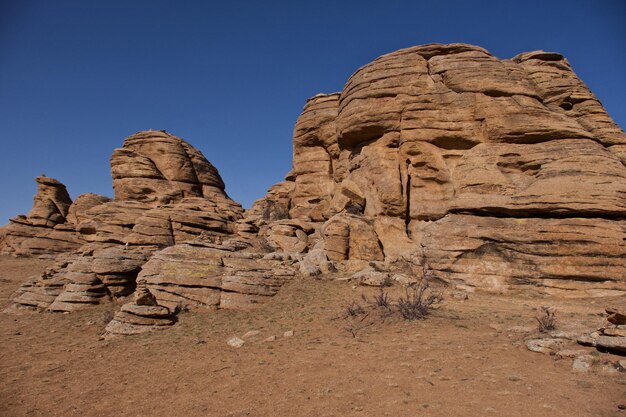
Baga Gazriin Chuluu is a unique granite rock formation located in Dundgovi Province, about 250 km from Ulaanbaatar, at an elevation of 1,768 meters. Covering around 300 km², the area features rocky mountains surrounded by flat steppe, and is home to wildlife such as wild sheep, ibex, and wolves. The landscape includes beautiful valleys, natural springs, ancient burial sites, deer stones, and petroglyphs.
Every autumn, the locals host the “Aduuchin Airag Festival,” featuring traditional events such as airag-drinking competitions, “dembee,” “khuruu gargakh,” and other activities celebrating Mongolian horse-herding culture.
Tsagaan Suvarga
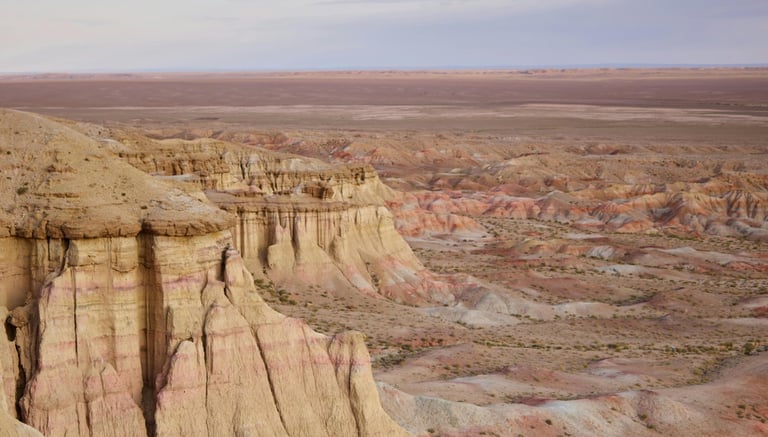
Tsagaan Suvarga, located about 156 km south of Ölziit soum, is a striking natural landmark rising 60 meters high and stretching over 400 meters. Unlike ordinary mountains, the cliffs appear suddenly from the flat steppe, creating a dramatic canyon that, from a distance, looks like the ruins of an ancient fortress. Sunrise here is especially magical, as the cliffs glow in rainbow-like colors, making it one of the most photogenic spots in Mongolia.
About 7 km east of Tsagaan Suvarga lies Khevtee Bosoo Cave, a 50-meter-long cave with a unique structure. Visitors enter standing upright but must almost crawl to exit as the ceiling gradually lowers, offering a memorable and fun adventure. After rainfall, water flowing down the cliffs creates a natural waterfall, adding to the dramatic scenery.
Nearby, travelers can explore other attractions such as Khukh Tsav with its colorful geological layers, Del Mountain’s ancient petroglyphs and rock inscriptions, and legendary sites like Döröö Khanginakh and Khongor Khairkhan. Formed from ancient seabed sediments eroded over millions of years, Tsagaan Suvarga and its surroundings offer both stunning landscapes and a glimpse into Mongolia’s natural and cultural history.

Yol Valley
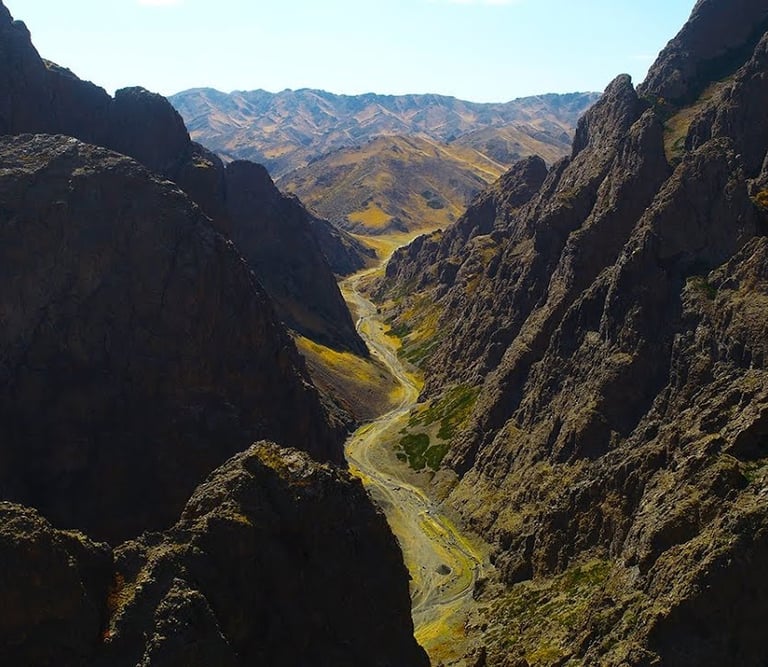
Yol valley, located 45 km west of Dalanzadgad in Ömnögovi Province and 650 km from Ulaanbaatar, is one of the nine natural wonders of the Gobi Gurvansaikhan National Park. This narrow canyon, carved by a mountain river, sits at an average elevation of 2,800 meters and covers a protected area of 64 sq km. The canyon is famous for its permanent ice and snow, which can form several meters thick and last into summer, though recent global warming has caused earlier melting. In rainy years, up to four waterfalls cascade from the cliffs.
The area is also home to the rare Bearded Vulture, found only in Central Asia, which nests at elevations of 1,500–3,000 meters and has a wingspan of 2–2.5 meters. Its blue-gray and yellowish plumage, pale head, and distinctive beard make it easily recognizable. This highly cautious bird feeds on bones and rarely lands on the ground.
Yol valley also offers excellent wildlife-watching opportunities, where travelers may spot Siberian ibex, argali sheep, snow leopards, and other rare animals, making it a must-visit destination for nature enthusiasts and adventure travelers.
Khongor sand dunes
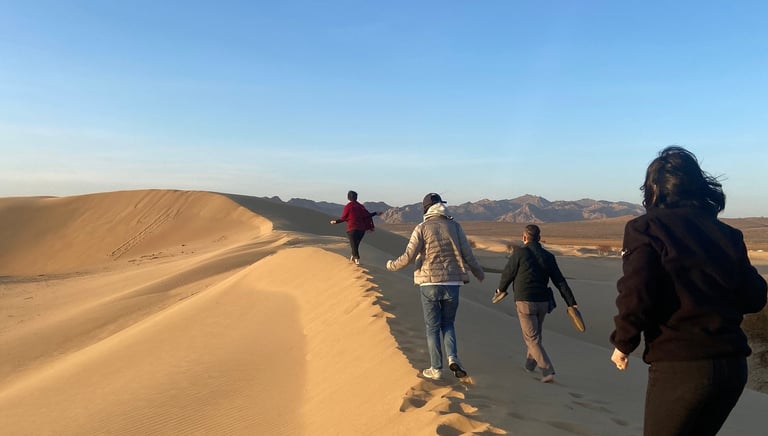
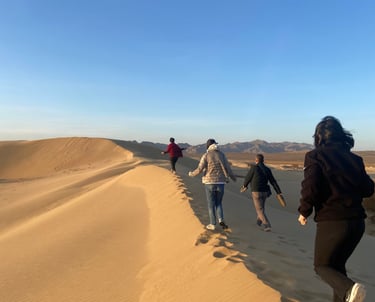
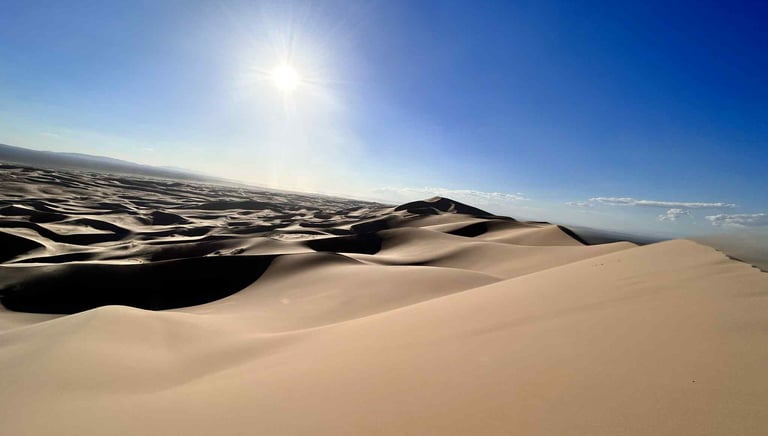
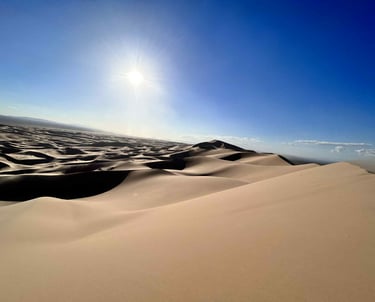
Khongor sand dunes, located in Sevrei soum of Ömnögovi Province, about 650 km southwest of Ulaanbaatar and 216 km west-northwest of Dalanzadgad, is part of the Gobi Gurvansaikhan National Park. It is Mongolia’s longest and one of the most impressive sand dunes, stretching over 130 km in length and 3–5 km wide, with some areas reaching 20 km in width. The tallest dune, Khanan, rises 195 meters above the surrounding desert. Due to wind-driven sand movements, some dunes produce a humming sound, earning them the nickname “Singing Dunes.” From the top of the 800-meter-high dunes, visitors can enjoy a panoramic view of the Gobi, giving the sensation of being on another planet.
The dunes are accompanied by the Khongoryn River, which splits into two streams and forms the scenic Alag Lake. Nearby, the Khatansavrei Mountains provide habitat for rare wildlife, including the snow leopard and the Altai snowcock, both listed in Mongolia’s and the world’s Red Book. The surrounding Bayan Bor range and Zoloon Mountains are rich in wildlife such as argali sheep and Siberian ibex. Fossil discoveries in the area, including the armored dinosaur Saichania found in 1977, highlight the region’s rich paleontological history.
Khongoryn Els is a key destination for Gobi tourism. Visitors can fully experience the dunes by sandboarding, camel riding, and exploring the surrounding landscapes, making it a must-visit for adventure and nature lovers.
Bayanzag
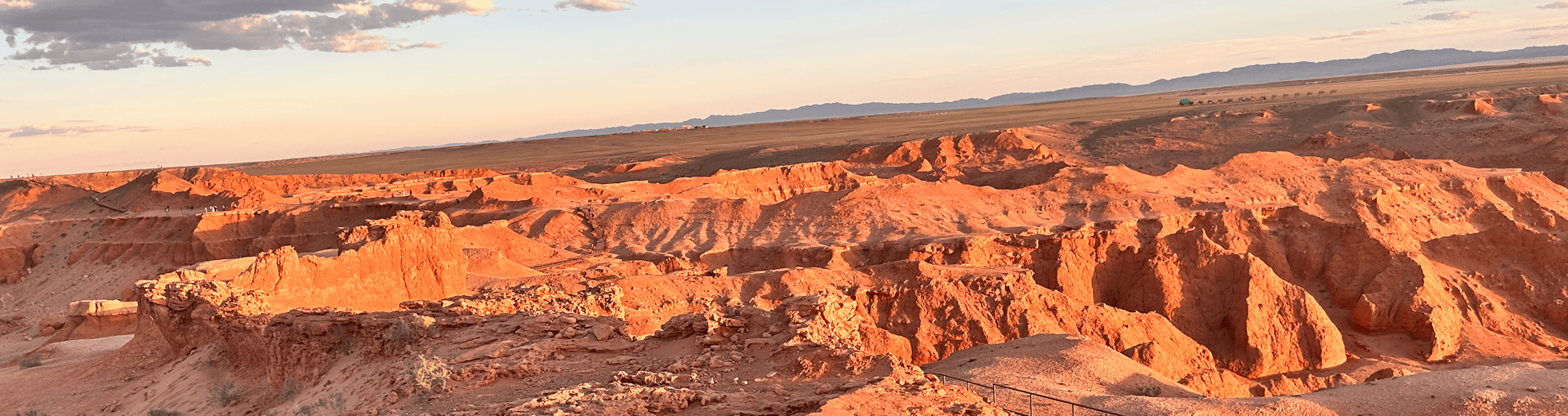
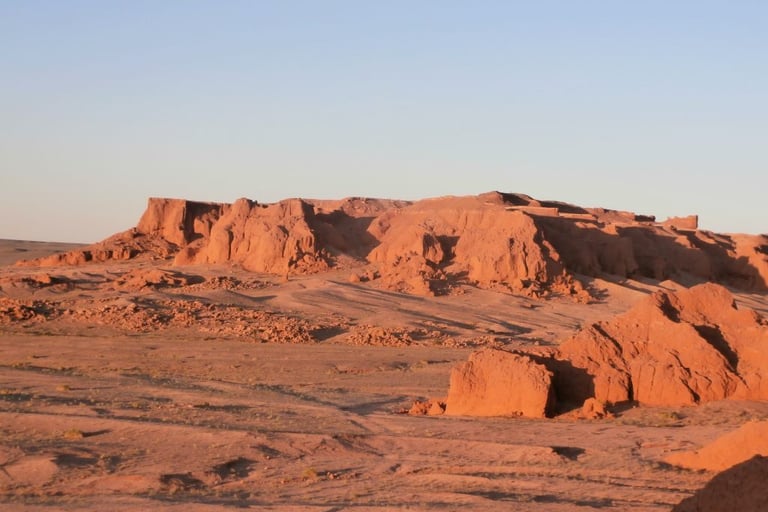
Bayanzag, also known as the “Flaming Cliffs” among foreign tourists, is located east of Bulgan soum in Ömnögovi Province. Famous for its striking natural formations, Bayanzag features steep red cliffs 20–50 meters high, making it one of the largest canyon-like formations in Mongolia. The red soil and the abundance of saxaul trees give the area its name, while local legends recall times when the land was so vast that a thousand camels could pass without being seen.
The cliffs were formed from ancient seabed sediments, creating dramatic, vertical formations. Bayanzag is historically significant for paleontology: in 1920, a team led by scientist Roy Chapman Andrews discovered dinosaur fossils here, including the first dinosaur eggs in the world, marking a milestone in scientific history. Andrews later wrote the book “On the Trail of Ancient Man” about Mongolia and Bayanzag.
The surrounding plains at the foot of Art Bogd Mountain are rich in historical heritage, containing remnants of ancient human settlements from 10,000 years ago. The area also features invaluable cultural sites such as Tögrögiin Shiree and the Havtsgait petroglyphs, making Bayanzag both a natural wonder and a site of archaeological significance.
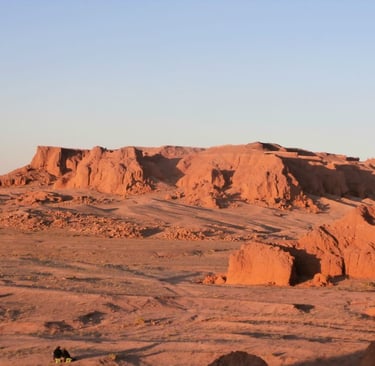
Ongi Monastery
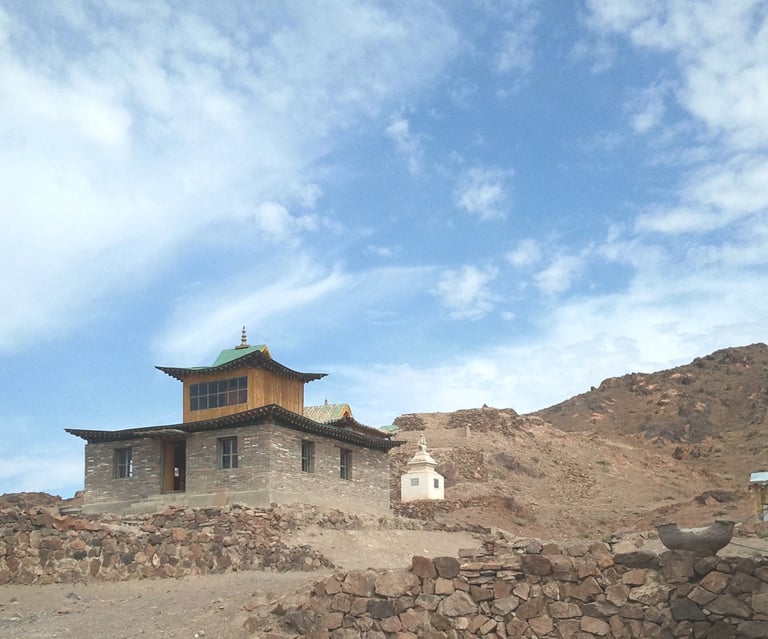
Ongi Monastery, located on the eastern bank of the Ongi River in Saikhan-Ovoo soum, Dundgovi Province, was founded between 1760 and 1810 by the revered monk Ishdonlkhandev and his disciple Bar Lama Damtsagdorj. Known in Tibetan as “Gundjambaalin”, meaning “Provider of Towns,” the monastery once housed over 1,000 monks across 28 temple complexes. Together with nearby monasteries such as Hushu Khural Monastery and temples established by Damtsagdorj and the Khutagt Lama, it was collectively referred to as the “Three Monasteries of Ongi.”
Ongi Monastery contained four main academic temples, offering teachings in Buddhist philosophy, meditation, tantric practices, and mathematics (Mamba theory). The last abbot, Luvsandorj, was active until 1937. Surrounding the ruins are five sacred ovoos (ceremonial mounds) and a spring known as the “Stomach Spring”, which was historically protected with a fence and small well for ritual use. A ceremonial platform called “Buyan Shat” was used to invite monks to gather, and the main temple of the central courtyard, Zuun Guden Temple, has been partially restored.
The monastery also houses statues and portraits of Buddha, the Ten Protective Deities, Bar Lama Damtsagdorj, and other important figures. On nearby Khadat Mountain, a 2-meter-tall, 1.3-ton statue of Luvanjalboo, the Water Spirit King, was erected by locals to protect the Ongi River. Today, Ongi Monastery remains an important cultural and spiritual site, reflecting Mongolia’s rich Buddhist heritage and history.
Frequently asked questions
How to book this tour?
If you would like to book Gobi desert tour, please send us your request
contact@mail.com
How does your product/service work?
We offer a [brief explanation of how your product or service helps your customers]. Our process is [simple/efficient/convenient] and [positive adjective] for you.
How much does it cost?
Our pricing varies depending on [what factors affect your price]. We offer a variety of options to fit your needs and budget. Please visit our [pricing page/contact us] for more information.
Do you offer [specific service inquiry]?
Unfortunately, we don't currently offer [specific service inquiry]. However, we do offer [alternative service] which might be helpful.
How can I contact you?
You can reach us by [phone number/email address/contact form link]. We are always happy to answer your questions.
Where can I learn more about you?
You can explore other sections of this website, such as the "About Us" page or our blog, to learn more about our company, mission, and team.